Part I: Sand Point
In an earlier post, we described the loss of a P-Patch on 27th Avenue NE near Eckstein Middle School. Some of the gardeners from 27th Avenue were able to acquire plots at the Sand Point P-Patch approximately two miles east along Sand Point Way. This property, too, fell to development, in 2001, making way for a new facility for Seattle Children’s Hospital, the owner of the land. However, unlike some gardens mentioned here, the Sand Point P-Patch did not die, but was moved wholesale across the street to Magnuson Park.
Farming Tradition on the Sand Point Peninsula
From the early 1900s small farms could be found dotting the Sand Point Peninsula in the northeast sector of the greater Seattle area along Lake Washington. In the early 1910s, a group of Japanese farmers formed a collective community at the south end of the peninsula. This group included the parents of Gordon Hirabayashi, who was born at Sand Point in 1918. The Hirabayashis and others decided to move south to Auburn, but other Japanese families stayed on..tif)
The circa 1925 photo above, courtesy of Densho, shows the Uyeji family on the porch of their home just off Sand Point Way. This property is approximately where the federal archives building now stands.

Photos in the Puget Sound Regional Archives property records document several Japanese homes that were confiscated and torn down early in World War II to make room for Naval housing in support of the Sand Point Naval Air Station. The families were, of course, removed to internment camps. This property was just north of NE 65th Street, where condos stand today.

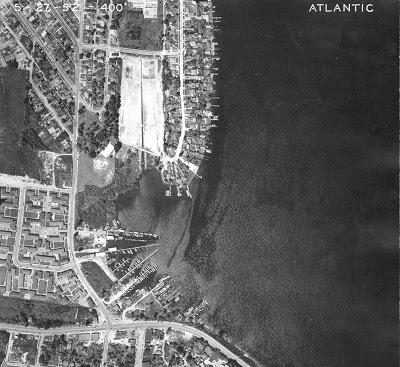
The Kroll insurance map printed in the early 1940s shows the property that had been leased Japanese farms, the Orth and Gilbert 10-Acre Tracts. The northern section became the Sand Point P-Patch in the 1970s. The area pictured was not annexed by the city until 1942.
Revival of Farming
The Sand Point P-Patch took shape in 1977, early in the days of the city's P-Patch program. It was located on the site of old navy housing associated with the Sand Point Naval Air Station. (Some say it was quonset huts.) The structures had been pulled down, though remnants remained in the form of foundations and apple trees. Neighborhood children remember playing in and around the foundations of the old housing in the 60s. The abandoned railroad tracks immediately adjacent to the property were pulled up in the mid-70s and officially became the Burke Gilman Trail in 1978. Naval Station Seattle still occupied the peninsula to the east, across Sand Point Way, although flights from the base ceased in 1970.
At some point, the tract had been transferred to the U.S. Forest Service, a division of the Department of Agriculture. In 1982 the feds declared the land surplus. Various entities expressed an interest in it; when the dust cleared Children's Orthopedic Hospital (now simply Seattle Children's) emerged as the owner in 1984. However, it would be another 17 years before the hospital decided on a use for the land. During that time, the P-Patch continued to operate under an annual lease arrangement.
In 2001 the Sand Point P-Patch, which had occupied the site for nearly a quarter century, fell victim to the common theme of "temporary use." The hospital decided to move ahead with development in 1998 and notified the gardeners that they would be ousted. Some in the p-patch community protested their eviction, asking for a small portion of the land to remain as a garden and even touting the therapeutic benefits of a garden for patients.
In 2001 the Sand Point P-Patch, which had occupied the site for nearly a quarter century, fell victim to the common theme of "temporary use." The hospital decided to move ahead with development in 1998 and notified the gardeners that they would be ousted. Some in the p-patch community protested their eviction, asking for a small portion of the land to remain as a garden and even touting the therapeutic benefits of a garden for patients.
When it became clear that the p-patch could not remain on the hospital grounds, the city offered gardeners the chance to create a new, larger patch across the street at Magnuson Park, the former navy base. Rather than simply giving up their hard-hoed plots and starting afresh, 33 of the 50 patchers decided to move their gardens bodily -- plants, soil, and all. What followed was a coordinated effort between the gardeners, the parks department, and the hospital to make this happen.
P-Patch Manager Rich Macdonald wrote to the team in charge of the development of the park:
"The Sand Point Naval Station is a logical site for relocation of the garden. Only at Sand Point is sufficient space and sunlight available to permit the P-Patch gardeners to design and build a beautiful new garden with their usual public amenities. community gardens have bee proposed previously for Sant Pint, although with the [imminent] loss of the present P-Patch, the need is greater than in the past." (Rich Macdonald to Sand Point Operations, City of Seattle, June 19, 1998, Seattle Municipal Archives)

Diagram of the Sand Point P-Patch in 1986. Courtesy Seattle Municipal Archives.
Choosing the Site

Magnuson Park is huge and, in 2000, was much less developed than it is today. Three p-patchers who happened to be employees of NOAA next door to the park undertook the task of selecting a suitable site for the new garden. They found it on a sunny hillside that had likely been constructed from the rubble of old runways that had run directly below it. They tested the soil to make sure it was healthy.
Marty DeLong was the volunteer coordinator for the move. She describes how the new garden became much more than a simple P-Patch:
"The old place was a "P-patch." This had to be a "community garden" because it was inside the park. And that's why we have the children's garden. We have native plants, we have the native plant nursery. We have the orchard. Those things were kind of insisted upon."
"The old place was a "P-patch." This had to be a "community garden" because it was inside the park. And that's why we have the children's garden. We have native plants, we have the native plant nursery. We have the orchard. Those things were kind of insisted upon."
Moving a Garden
So how does one move a garden? It may not be as simple as staking out a new patch and starting over. Dedicated gardeners will want to move their plants, artwork, trees and shrubs that define the garden, and, perhaps most importantly, the soil. Gardeners interviewed for this project stressed the importance of retaining soil that they had built up over years with judicious application of compost and soil amendments.
"So in the fall of 2001 -- the hospital was wonderful. They sent their grounds crew over with big flatbed trucks because we dug up all of our plants that we wanted to take over. And then we thought we could dig up some of the little trees and we couldn't! So they went back to the hospital and got their big -- whatever they're called -- and dug them up. We took the cherry tree that was there because someone had died in the garden and it was the memorial cherry tree. We took a lilac, we took a pear, we took a fig, and then just lots of perennials that we had here and there." (Marty DeLong)
"So in the fall of 2001 -- the hospital was wonderful. They sent their grounds crew over with big flatbed trucks because we dug up all of our plants that we wanted to take over. And then we thought we could dig up some of the little trees and we couldn't! So they went back to the hospital and got their big -- whatever they're called -- and dug them up. We took the cherry tree that was there because someone had died in the garden and it was the memorial cherry tree. We took a lilac, we took a pear, we took a fig, and then just lots of perennials that we had here and there." (Marty DeLong)
A bit of negotiation with the hospital regarding the soil turned out to be a win-win situation.
"They had to remove soil to level [the ground], The contractor was going to have to take the soil up to Everett to dump it. We had worked on that soil for years. We made a deal. They could haul it across the street and save them 60 miles round trip. And we get the soil that we had been enriching over all these years.
So they were wonderful. And we meanwhile had been busily digging up our own personal gardens. And then we took everything over, and there's kind of a little swale beside the garden that's now part of the native plant nursery, but nobody was there then. And we put all our plants there and covered them with straw because it was the fall." (Marty DeLong)
Kathy Dugaw was also involved in the move and in setting up the new garden at Magnuson. The timing of the move -- right after the events of 9/11 -- is something that sticks in her mind:
"Right after 9/11. Yeah. Easy to remember. Oh, and it was, it was so strange walking over there. I mean, 'cause it was deadly quiet because usually we're in a traffic pattern for the planes and there were no airplanes or anything like that. It was weird." (Kathy Dugaw)
"Right after 9/11. Yeah. Easy to remember. Oh, and it was, it was so strange walking over there. I mean, 'cause it was deadly quiet because usually we're in a traffic pattern for the planes and there were no airplanes or anything like that. It was weird." (Kathy Dugaw)
Today the Magnuson Community Garden is a showpiece consisting of seven different components: an orchard, a native plant border, a native plant nursery, a tranquil garden, an amphitheater, a children's garden, and the p-patch which now has plots for 140 gardeners. Much more can and will be said about the diversity of talent and volunteerism that went toward creating this special place.

Magnuson P-Patch, summer 2022.

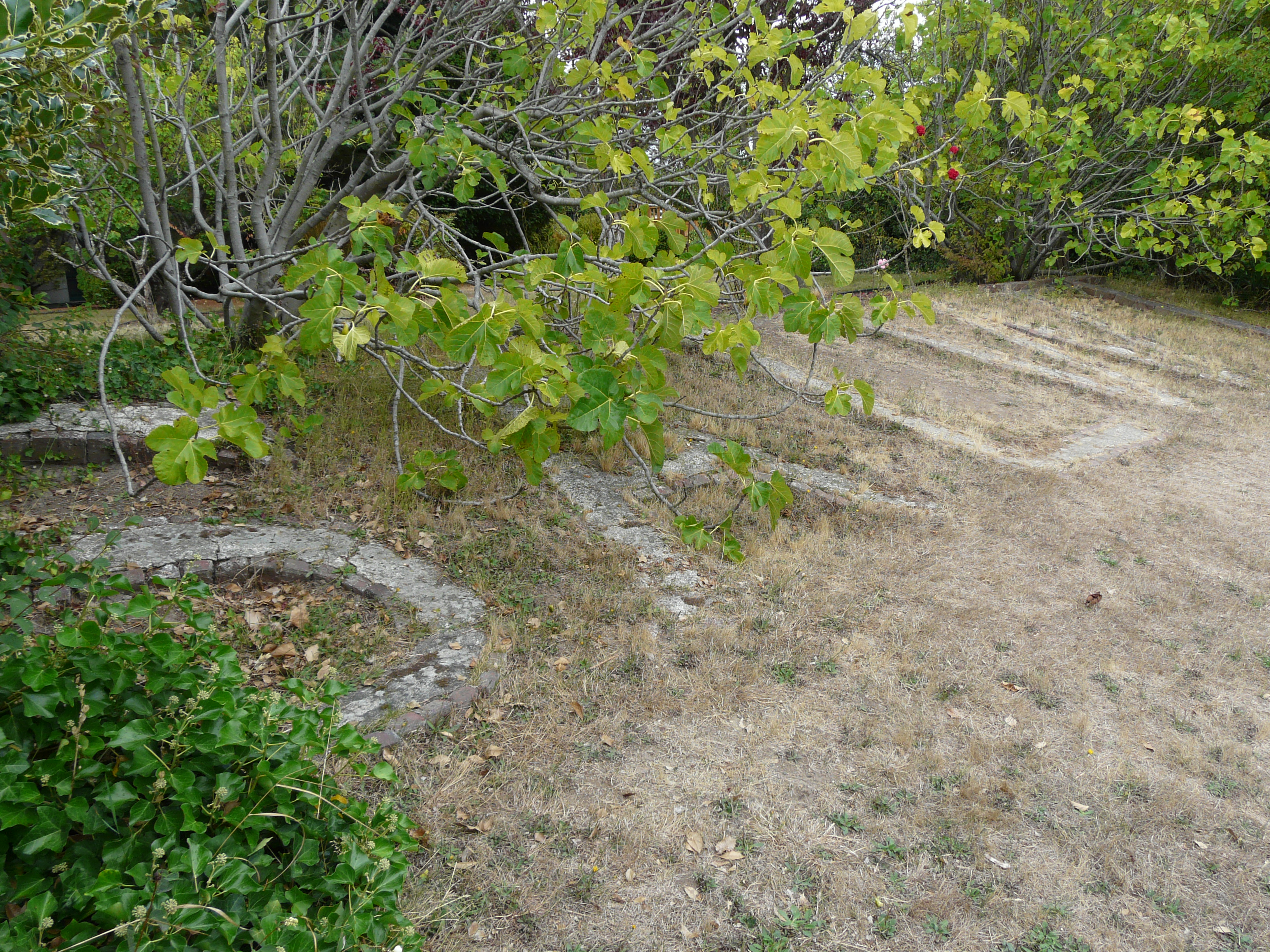
Seattle Children's 70th and Sand Point Administrative Building stands roughly where the Sand Point P-Patch was located. The main hospital campus is approximately two miles to the south.


Nothing remains of the old p-patch; however, a bench and plaque on the Burke Gilman Trail immediately adjacent to the old garden at the corner of NE 70th commemorates one of the stalwart gardeners. Maxine Wolfheim suffered a fatal heart attack while gardening.
Thanks to Marty DeLong, Kathy Dugaw, and Mark Huston for oral history interviews.
This post is a part of the Seattle Community Gardening History Project.
🌿








.jpg)


