Showing posts with label p-patch. Show all posts

Sunday, August 21, 2022

How do you move a garden? Part two: The Eastlake P-Patch


The Eastlake neighborhood of Seattle boasts a lovely community garden nearly hidden from view down a steep embankment. In the 1990s, gardeners pulled together to fight threats to their patch. In contrast to the Sand Point P-Patch, the Eastlake garden was located on public land controlled by the city. Unfortunately, this did not guarantee protection when developers came calling. Eastlake had no park such as Magnuson Park at Sand Point to which they could move the garden. In fact, the neighborhood with breathtaking views of Lake Union and the Olympic Mountains had very little green space at all. Faced with this situation, the community decided to combine their efforts and fight for both the garden and a new park.


The Shelby Street right-of-way in 1941. Eastlake Avenue is at top; Fairview Avenue at bottom. The lower portion of the hill is the site of the original p-patch. Courtesy Seattle Municipal Archives, Image #39970.


The top of the incline was used as a makeshift parking lot for businesses on Eastlake Avenue, including Covey Laundry. Courtesy Seattle Municipal Archives, Image #39961, 1941.


Rough Start

The story of Eastlake P-Patch dates to 1981 when a small group of neighbors, about 10 families, banded together to carve out a garden where the Shelby Street right-of-way met Fairview Avenue on the shore of Lake Union. Barbara Donnette remembers the ordeal of hacking out blackberry vines and weeds only to find piles of garbage underneath it all:

"We ultimately cleared the land, hauled away all of the debris that had collected there -- there were old car parts, old appliances deteriorating, carpeting -- you name it! And I spent quite a lot of time. We had a Volkswagen bus and at the time you could dump at the transfer station. I remember being really stuffed up in my nose after the trips with the carpeting and the mold. It was pretty awful. Anyway, we carved out 18 200-square foot plots."

The neighborhood now had a P-patch. Unfortunately, it was only a few years before real estate development put the squeeze on the garden. The demolition of a building on Eastlake Avenue was the first challenge when the city gave the owners permission to funnel trucks and dumpsters down through the right-of-way, directly through the patch. For a brief space of time gardeners coped with a reduced footprint. 

Then, early in the 1990s, construction of a new building on Eastlake Avenue threatened to take over the garden completely. The P-patch had run afoul of "interim use." However, this time the community revolted, organized, and demanded not only that the garden be preserved, but that the undeveloped green space directly north of the construction site be purchased by the city and made into a park. 


The Eastlake P-Patch in 2004 before the build-out of the upper portion. Courtesy Seattle Municipal Archives.

Moving things around

Thanks to the efforts of the Eastlake Community Council, the P-patchers, and a variety of other advocates, the dream of a combined park and p-patch became a reality in 1998. The group formed to honcho the effort, the Olmsted-Fairview Park Commission, honored the vision of the Olmsted Brothers landscape company which a century earlier had recommended small parks along Seattle's waterways, including Lake Union. City, county, and state funding was mobilized to allow the city to purchase land on both sides of the Shelby Street right-of-way from private owners. In 1995 the community celebrated the successful land acquisition with a blackberry festival.

The P-Patch was relocated to accommodate the design of the park. However, the move was not far -- a few feet to the south. As at Sand Point, the gardeners hoped to take their plants and the soil they had worked on to the new site. However, under cramped conditions and with heavy equipment in the way, it was difficult. The soil that was moved had to be augmented to become fertile again. Little was left of the old garden.


The Kroll map published in 2000 shows the Shelby Street right-of-way labeled "Not Open" and plats below it already named "Fairview Olmstead [sic]," the park to come. 

The Patch Rises

The Fairview Olmsted Park (now generally referred to as Fairview Park) was laid out during the winter of 1998-99. The design was created by Nakano/Dennis landscape architects (now Nakano Associates).

Since that time three fundraising efforts, each anchored by a Department of Neighborhoods Matching Fund grant, led to infrastructure improvements. Most significantly, grants obtained in 2009 allowed the garden to expand uphill. Today the garden holds 47 plots.

The garden shed was constructed with funds raised in 2000.


The Eastlake P-Patch in 2022 showing the lower and upper gardens.


Stairsteps connect Eastlake Avenue at the top of the incline down to Fairview Park (at right) and the Eastlake P-Patch (at left), 2022.

Whimsical art can be found throughout the garden.

In the (Cheshiahud) Loop

Today the Eastlake P-patch and Fairview Park are stops along the Cheshiahud Loop, a series of interconnected paths, alleys, and streets that encircle Lake Union. Small pocket parks can be found at several street ends along Fairview. The loop is named in honor of a Duwamish elder who lived in the area with his wife for many years.


The view from the Eastlake P-Patch and Fairview Park, 2022.


Thanks to Barbara Donnette for her oral history interview.


This post is a part of the Seattle Community Gardening History Project

🌿


Friday, May 20, 2022

Farming Revival in the Rainier Valley

"Inch by inch, row by row, someone bless these seeds I sow." 

(The Garden Song, David Mallett)

Today the landscape of Seattle is dotted with tiny gardens called P-patches, as well as several larger urban farms and orchards. Rainier Valley is no exception; a number of vacant lots and underutilized spaces have been converted to meet the growing desire for freshly-grown produce and the need for food security. Some of these spaces are dedicated to the newer groups of immigrants and refugees who have settled in the valley.

The City of Seattle, through its P-patch program, and the Seattle Housing Authority have made concerted efforts to provide gardening space for newcomers. Many of these families come from farming backgrounds and a space to plant and harvest familiar foods is a way to ease the transition to their new home. 

Rainier Valley also boasts a demonstration orchard in Hillman City, as well as the Rainier Beach Urban Farm and Wetland, developed on the site of the city’s old Atlantic City Nursery, and the showpiece Bradner Gardens Park.

Whimsical art at Climbing Water P-Patch


A patchwork of patches

More than a dozen P-patches are scattered around the valley. The big housing communities at NewHolly and Rainier Vista each offer several parcels of land for gardening. In addition, each community provides a farm stand where gardeners may sell their extra produce. (These are currently closed to the COVID pandemic.) The Hillside P-Patch near Franklin High School is farmed by Cambodian immigrants on a steep incline that was once part of the Vacca Farm and served as "cheap seats" for kids wanting to watch games at Sick Stadium. Climbing Water, named for the adjacent hill-climbing Cedar River pipeline, is a narrow, terraced garden sandwiched between apartments that recalls the hillside gardens of the old Italian residents of Garlic Gulch. The Thistle patch, one of the oldest and largest in the city, provides 77 plots for East Asian immigrants and others in Rainier Beach. And the smaller NewHolly 29 Avenue garden serves East African, Southeast Asian, and Chinese American residents of the NewHolly community. 

Longtime gardeners Plekeao and Mansak Douangdala came to Seattle in 1981 from a refugee camp in Thailand after fleeing communists in their home country of Laos. They first started gardening on a plot of land provided by Our Lady of Mount Virgin church. Many years later, Mansak discovered an overgrown parcel of land on Estelle Street and began to mow the city-owned property. Now the couple cultivates a large garden plot at the Estelle Street P-patch where they raise bitter melons, eggplants, yam root, taro leaf, onions, peppers, corn and mustard greens.


Rainier Beach Urban Farm and Wetlands, 2022

Farm in the city

In 2010, Rainier Beach Urban Farm and Wetlands was established on the site of a defunct city nursery in the Pritchard Island neighborhood of Southeast Seattle. The 11-acre nursery, which grew plants for the city's parks and utility properties, occupied the land from about 1937 to 2010. Some old greenhouses and sheds remain. Atlantic City Nursery and neighboring parkland existed on land reclaimed from Lake Washington when that body of water was deliberately lowered in 1916 by the opening of the Ship Canal. Much of it is still wetland. The neighborhood, no longer an island after the lake lowering, was also at one time the site of a Duwamish Indian settlement.

Today, RBUFW is run as a cooperative garden and educational farm in a partnership between the City of Seattle, Tilth Alliance, and Friends of the Rainier Beach Urban Farm and Wetlands. There are no individual plots at Rainier Beach. Instead, the land is managed in a way to promote education and advocacy, all while producing fresh produce for the benefit of the community.

In an interview, Sue Gibbs, a founding member of RBUFW, described some of the challenges the project faced in transforming the acreage into a working and welcoming space:

"It was a complex design team, because there's so much going on here. We had an architect, an urban farm specialist, a wetland specialist. We finally chose Berger Partnerships, they're landscape architects. So we were on the upswing and then, boom!, the farm was closed for a while [for construction]. We had just planted a bunch of fruit trees the year before; they were still young and then they didn't get pruned and shaped. We had to rebuild the volunteer network, the staffing here at the farm, rebuild the Friends board. And that was starting to go really well, and then COVID hit." (2022 oral history)

Despite these challenges, the farm has been able to take shape, offering space and programs for a diverse community. On any given day there may be a group of East African elders working on their crops, a gaggle of pre-schoolers on a field trip, young adults in the school district's Bridges Program learning vocational and social skills. The farm also offers a Community Supported Agriculture (CSA) program; in addition to paid subscriptions, CSA produce goes to various food programs. A children's garden and a U-pick area, a modern communal kitchen and meeting room -- all serve to fulfill the vision of the founders, in the words of Sue Gibbs, "a healthy, safe place for people to grow, live, and grow their families."

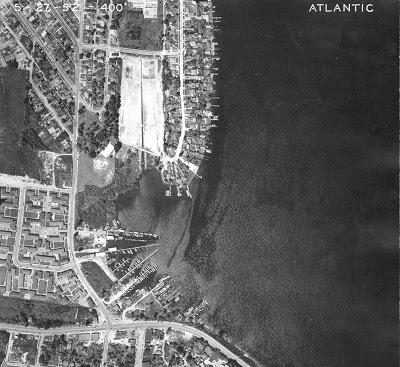
1952 aerial showing the old Atlantic City Nursery. Courtesy Seattle Municipal Archives, Don Sherwood Parks Collection.

A refuge for all

The site of Bradner Gardens Park has seen multiple layers of use. When Bradner P-Patch in the Mount Baker neighborhood was founded in 1987 it still had school portables on the grounds from the time it was used as a middle school annex (1971-1975). Until 1993 the structures were used by a nonprofit, Central Youth and Family Services. And prior to all of that it had been the site of  the Quinsite-Bradner housing project (1942-53), emergency housing for veterans returning from World War II and the Korean conflict. Some folks still recall these "temporaries" around town that lasted much longer than the five years planned. 

Originally set up to provide space for Mien refugees from Laos in the 1980s, the Mount Baker garden overcame a serious threat. Long-time gardener and activist Joyce Moty described how the neighborhood banded together to protest the city’s decision to sell the land in the mid-1990s:


 “The Southeast Atlantic Community Association – we had a two-year battle with city hall over trying to save this piece of land from being sold for market rate housing. And we went to the mayor's office, talked to city council people, trying to say this is really not a good idea to sell this land, but we were just citizens.” (2021 oral history) 


Ultimately, the group was instrumental in getting an initiative titled Protect Our Parks passed; the 1996 law states that the city may not sell park land without replacing it in the same neighborhood. Today Bradner Gardens Park offers a children’s garden, demonstration beds, a bee colony, art installations, and basketball hoops, in addition to its 61 P-patch beds.


Bradner Gardens, 2021. The garden on Mount Baker hill enjoys a view of downtown Seattle. Sadly, the community building seen at right was damaged by arson a few years ago.

This post is a part of the Seattle Community Gardening History Project. Thanks to Mansak Douangdala (interviewed by Nancy Dulaney), Joyce Moty, Sue Gibbs, and Valentina Barei for their oral history interviews.

Thursday, May 19, 2022

Losing Ground: Seattle's Lost Patches

Over the course of a half century, Seattle has developed well over 100 p-patch gardens. Not all have survived. Too often, patches have suffered by being labeled “interim use.” The pressures of urban development coupled with rising property values brought down a number of gardens. Other succumbed to social conflict, both external and internal, and other factors. Today we will look at a few of the patches that were forced to close permanently and the circumstances behind the closures.

Jackson Place

In 1995 the Jackson Place Community Council applied for and received a modest grant from the Department of Neighborhood’s Matching Fund Program to establish a p-patch. The grant application spoke of “the opportunity to beautify our community, take advantage of one of the numerous vacant lots, and have a focus for developing and fostering neighborhood friendships and pride in our community.” The street corner lot was located at 16th Avenue S. and S. Weller Street on the western slope of the city’s Central District. Former P-Patch Program Manager Rich Macdonald remembers it as “a little garden with a little view. It was really pretty.” Unfortunately, only six years later the owner of the property, a food processing company, terminated the lease likely due to dissolution of company assets preparatory to becoming inactive. Today the corner is a parking lot.

The loss of Jackson Place did provide an added incentive for the build-out of the creatively designed and named Climbing Water P-Patch, just two blocks to the south on a steep slope adjacent to the Cedar River pipeline. Climbing Water was established in 2006 on land leased from HomeSight, an affordable housing developer, and with the support of the Jackson Place Community Council.

                        The short-lived Jackson Place P-Patch. Courtesy Seattle Municipal Archives.


                                            Steep and narrow Climbing Water P-Patch


Beacon Avenue P-Patch

On Central Beacon Hill, around the corner from the Beacon Avenue thoroughfare, a small community garden sits tucked away from the street behind heavy shrubbery on S. Graham Street. The land is owned by the adjacent Bethany (formerly Beacon Avenue) United Church of Christ. The property had been gardened for some time by members of the church, but -- in an effort to expand the gardening base in 1993 -- the church agreed to turn over management of the garden to the P-Patch Program. The relationship endured for thirteen years, but ultimately came to an end in 2005. The garden faced obstacles that included its placement between private properties and lack of any street frontage, making it difficult for patchers to deliver materials to the garden. Layered on top of this were ongoing personality conflicts between several gardeners whose disputes were left to program staff to mediate. Ultimately the city decided these difficulties and the resulting fall-off of interest in gardening made effective management impossible.

Some years later, in 2016, the garden space was turned over to a nonprofit organization, Nurturing Roots, which has created a small urban farm complete with gardening workshops, communal meals, chickens, and a commitment to social and environmental justice. Nurturing Roots leases the property from Bethany Church.


Chickens at Nurturing Roots Farm


Angeline

Perhaps the most heartbreaking loss was that of Angeline P-Patch, a garden that existed for a scant 18 months. Angeline and Ferdinand were two gardens established by the city in the summer of 1982 on vacant land under power lines on Beacon Hill. The patches were intended to serve Southeast Asian refugees, many of whom had settled in the area. Families from Laos and Cambodia had been violently uprooted from their homes due to fallout from the Vietnam War. The new patches were the city’s first effort to find land for these one-time farmers to cultivate and grow some of the vegetables of their homeland. Angeline was offered to ethnic Mien families.

Unfortunately, the best laid intentions ran afoul of culture clash. A few neighbors of the Angeline patch orchestrated a campaign against the garden, calling it a public nuisance. The Beacon Hill Community Council became involved. Concerns ranged from children playing in the street to vermin to newcomers washing their cars on the street and asking for favors from residents, such as use of a telephone (in the pre-cell phone era). One neighbor complained that the garden was messy and weedy, likely not recognizing Asian vegetables or understanding the Mien practice of letting plants go to seed in order to preserve the seeds for future planting. Possibly the greatest concern was the habit of the Asians to work in their plots late into the evening, even after dark with the help of flashlights. From the perspective of 40 years, it becomes clear that cultural practices on both sides were in conflict. A few isolated incidents, compounded by language barriers, likely led to an overblown reaction from a few neighbors.

P-Patch staff spent most of 1983 struggling to address the concerns of the neighbors while also working with the gardeners to curb some practices. In the summer of 1983, one of the most disgruntled neighbors hired an environmental consultant firm to test the garden for suspected vermin infestation, harmful bacteria, and human waste. None was found. Unfortunately, it was too late to save the garden. By autumn, the efforts were abandoned and the garden was set for closure at the end of the year.

For the 1984 growing season, families who wished to continue gardening were assisted to find plots at the Ferdinand patch a few blocks away or at the more distant Thistle P-Patch in Rainier Beach.


Site of the Angeline P-Patch returned to nature

NE 75th Street and 27th Avenue NE

In 1978 the P-Patch program was able to lease a parcel of land downhill from Eckstein Middle School in Northeast Seattle for the low low price of $85 per year. Sometimes known as Hillside, sometimes as Ravenna Hillside, but generally referred to now as that garden where the skinny houses are, the 16-plot patch lasted for a decade. The land was owned by a retired couple who lived in Okanogan County. Upon the death of the husband, the wife made the hard decision to sell the land noting that she was “sorry to see the Pea [sic] Patch go.” 

The tale of 27th Avenue demonstrates the risk of siting p-patches on private land. With only a short-term lease (generally one to three years), gardeners run the risk of being uprooted at almost any time.


Plan of the Ravenna Hillside P-Patch


Sand Point

Some of the gardeners from 27th Avenue were able to acquire plots at the Sand Point P-Patch approximately two miles east along Sand Point Way. This property, too, would fall to development, in 2001 making way for a new facility for Seattle Children’s Hospital, the owner of the land. However, unlike some gardens mentioned here, the Sand Point P-Patch did not die, but was moved wholesale across the street to Magnuson Park. The story of that heroic effort is told here.

This post is a part of the Seattle Community Gardening History Project

🌿